Clothes that come off the line or out of the airer smelling musty have almost always taken too long to dry. Damp fabric at room temperature is an excellent environment for bacteria and mould, and the compounds they produce are what you can smell. The fabric is not dirty; it has been wet for long enough that something grew in it.
How long is too long?
Beyond about a day, the risk rises steadily, and beyond two days it is close to certain in a cool room. The smell develops while the fabric is still damp, which is why it is already there the moment the washing is dry rather than appearing later.
Anything drying that slowly is signalling a problem: too crowded, too cold, too humid, or spun too slowly to begin with.
What are the usual causes?
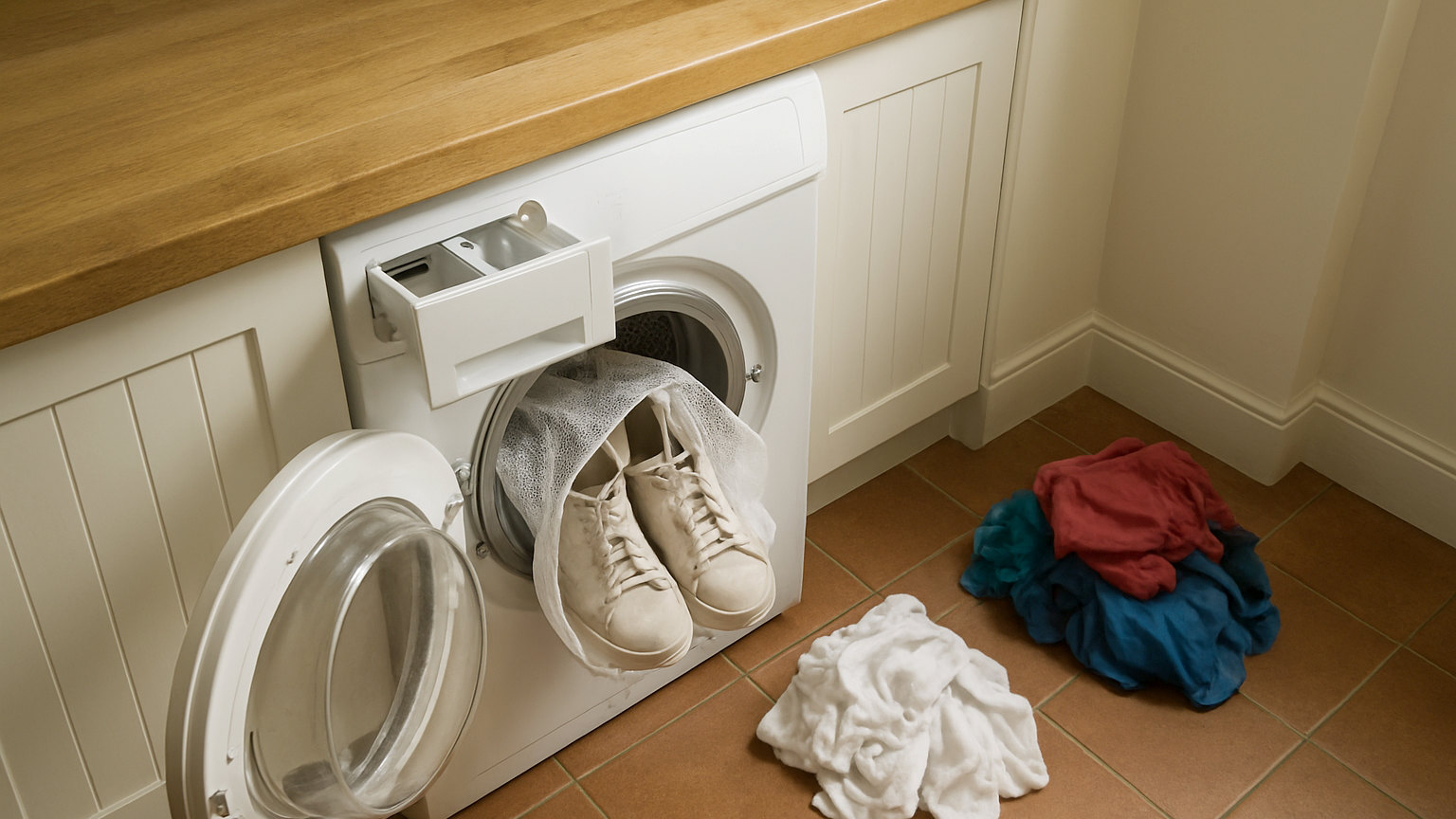
- A load left sitting in the machine after the cycle finished. Warm, damp, enclosed and still, a drum is the ideal environment, and a few hours is enough in summer.
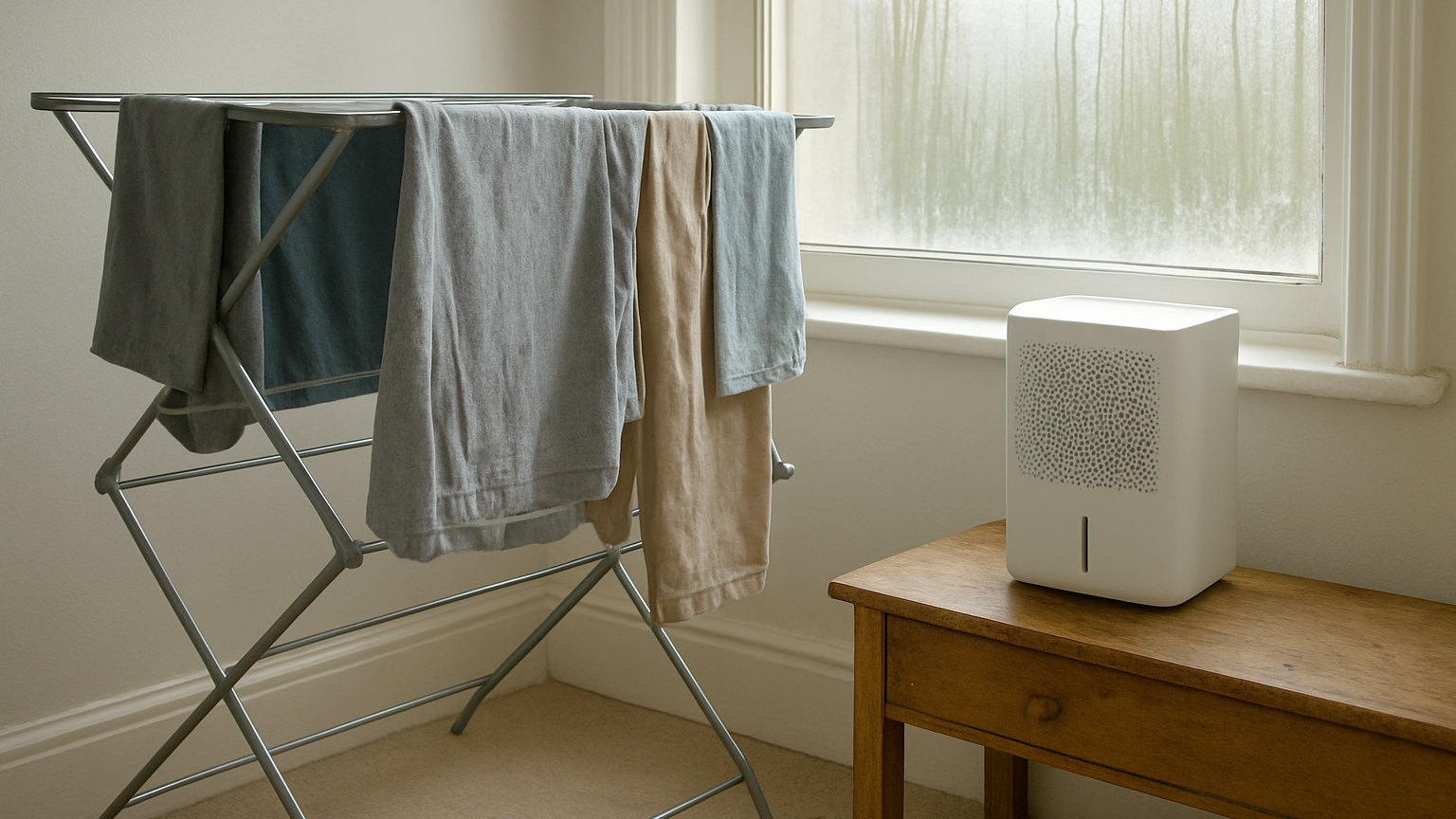
- An overcrowded airer, where items touch and the fabric between them never dries.
- A cold room with no ventilation, where the air is already saturated and cannot take up more moisture.
- Too low a spin speed, leaving far more water in the fabric than necessary.
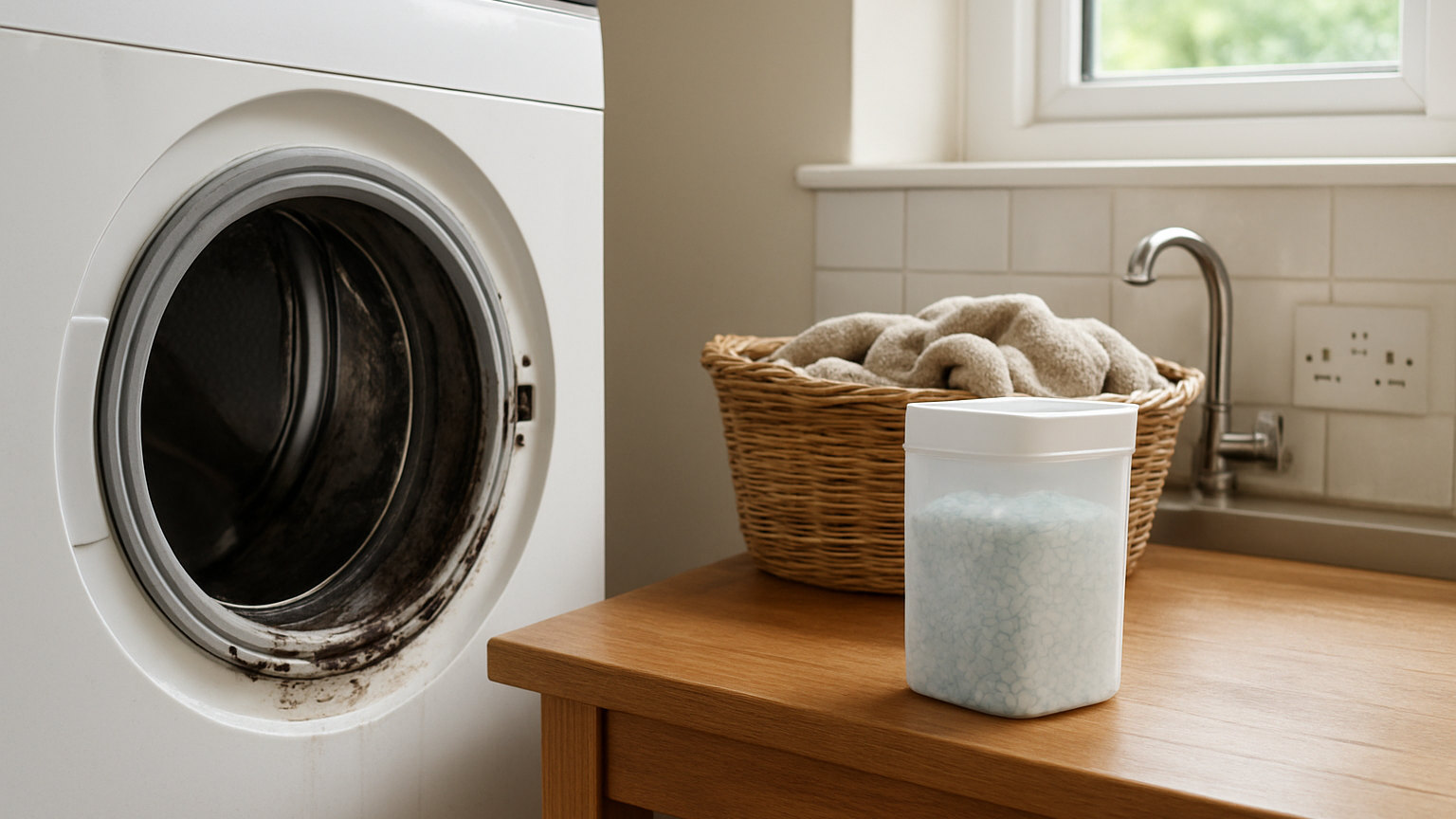
- A washing machine that is itself dirty, transferring a smell into the load before drying even starts.
- Thick items such as jeans and hoodies where the waistband, pockets and hood dry far later than the rest.
How do you fix a load that already smells?
Rewash it, and change something about how it dries, or you will simply repeat the result. Wash at 60 degrees if the fabric allows, since sustained heat deals with the bacteria properly. Add a cup of white vinegar to the drum in place of fabric conditioner, or use a laundry sanitiser formulated to work at lower temperatures. Then dry it fast, with a fan, a dehumidifier or a tumble dryer rather than on the same crowded airer.
Simply rewashing and drying it slowly again will produce the same result.
Why does the smell come back when clothes get damp?
Because the residue is still in the fabric. Bacterial by-products bind to fibres and are not fully removed by a cool wash, so they release their smell again whenever moisture is present. That is why a shirt can smell fine in the wardrobe and unpleasant an hour into being worn.
This needs a hot wash or a sanitising product to clear properly, and sometimes two.
Is the washing machine the real problem?
Often, particularly in a household that washes exclusively at 30 degrees with fabric conditioner. A film of detergent residue, conditioner and lint builds up behind the door seal, in the drawer and in the drain pipe, and it develops its own smell that transfers into every load.
Run an empty maintenance wash at 60 or 90 with a machine cleaner, clean the drawer, wipe under the lip of the door seal thoroughly and clean the filter. Do this monthly, and leave the door and the drawer ajar between washes so the drum can dry.
What prevents it?
Get the washing out of the machine as soon as the cycle ends, spin at the highest speed the fabric allows, space items properly, and dry in a warm ventilated room or with a fan. Aim for everything to be dry within a day.
If the room genuinely cannot achieve that, a dehumidifier or a short finish in a tumble dryer is worth the cost, because the alternative is rewashing the load.
Does drying outside help?
Considerably, and not only because it is faster. Ultraviolet light has a genuine effect on the bacteria involved, and moving air carries away both the moisture and the odour compounds rather than leaving them in the fabric. Airing a musty garment outside on a breezy day will often improve it substantially even without rewashing it, which is worth trying before putting it through another cycle.