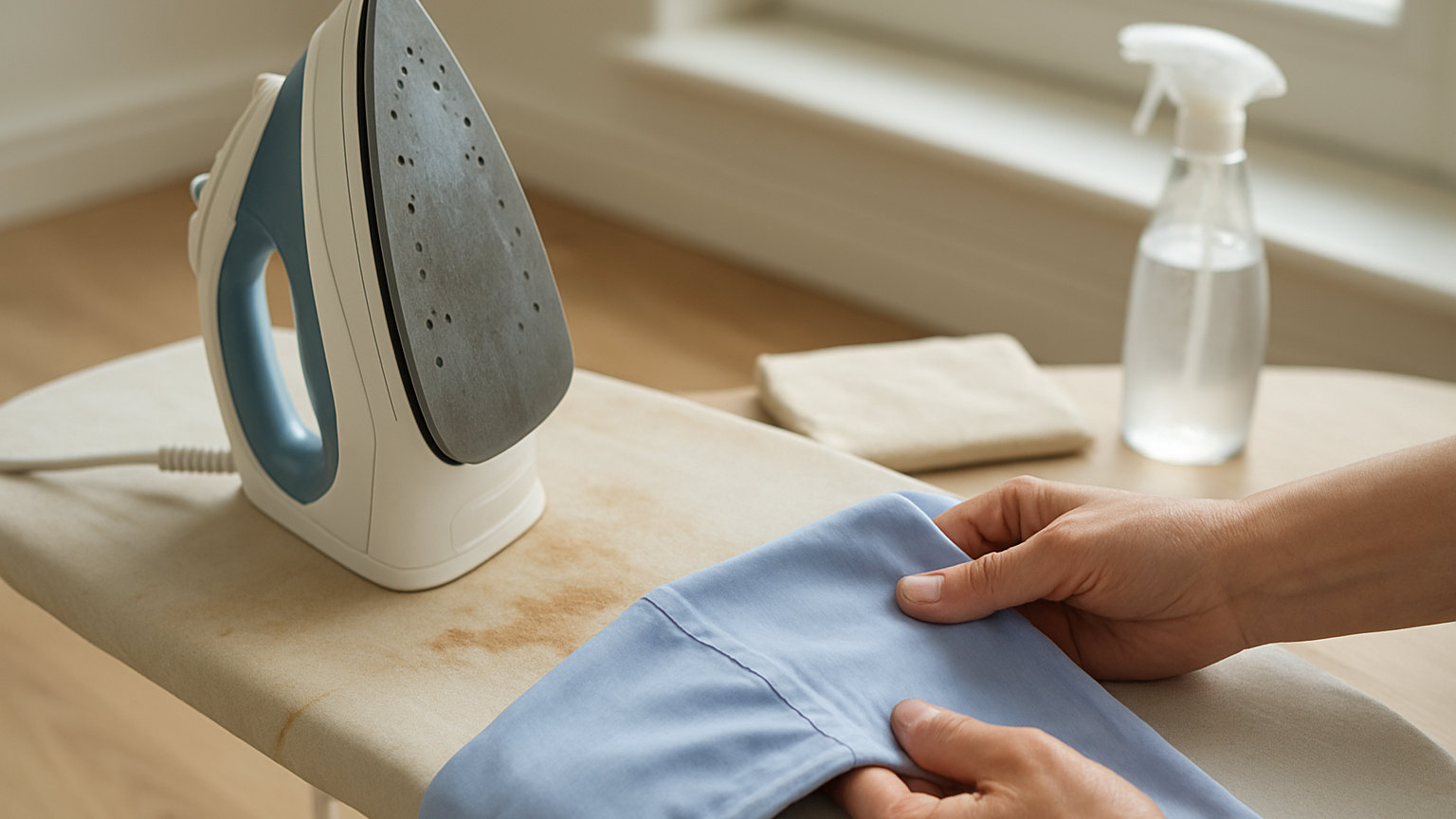
Every iron uses the same three dot system as clothing care labels, which makes the whole question simpler than it looks. One dot is the coolest setting, two is medium and three is hot. The label on the garment tells you the maximum it can take, and going above that is what melts synthetics and scorches cotton.
What do the dots correspond to?
- One dot – around 110 degrees. Acrylic, nylon, acetate and most synthetics. No steam.
- Two dots – around 150 degrees. Polyester, wool, silk and blends. Light steam, usually through a cloth for wool and silk.
- Three dots – around 200 degrees. Cotton and linen. Full steam.
- A crossed out iron – do not iron at all.
- An iron with the steam symbol crossed out – dry iron only, no steam.
What is the right order to work in?
Coolest first, hottest last. An iron heats up in a couple of minutes and takes far longer to cool down, so sorting the pile by fabric before you start means you never wait. Begin with synthetics on one dot, move up through wool and silk, and finish with the cottons and linen on three.
If you do have to come down a setting, allow several minutes and test on a hidden seam before touching the garment. A hot soleplate on nylon leaves a melted mark that cannot be repaired.
What if there is no label?
Start at the lowest setting and work up. Test on an inside seam, a hem or the inside of a cuff, and increase the heat only if the creases are not coming out. It takes an extra minute and it is the only safe approach with an unlabelled garment.
As a guide, if the fabric feels smooth, slippery and slightly cool to the touch it is likely synthetic and wants low heat. Natural fibres feel warmer and more textured.
Which fabrics need particular care?
Linen needs the highest heat and plenty of steam, and it should be ironed while damp. Cotton also does better damp than bone dry. Wool should be pressed rather than slid over, with a damp cloth between the iron and the fabric. Silk needs medium heat, no direct steam and no water droplets, which leave permanent water marks.
Viscose and rayon crease badly and scorch easily, so use a low setting and a pressing cloth. Anything with elastane needs low heat, since the elastic fibres are damaged well below the temperature the outer fabric can take.
Should clothes be damp when ironed?
Natural fibres, yes. Moisture in the fabric allows the fibres to relax and reset under heat, which is the whole mechanism of ironing. Cotton and linen taken off the line slightly damp iron far more easily than the same items bone dry.
If items have dried completely, use the spray function or a plant mister to dampen them, or use the steam burst on the iron. For synthetics, keep them dry and use low heat, since water on a cool setting simply sits on the surface.
What causes scorch marks?
Too much heat, too long in one place, or both. A scorch on cotton is a heat burn that has discoloured the fibres, and light ones can sometimes be improved by dampening and drying in sunlight. A dark brown scorch has damaged the fabric permanently.
On synthetics the failure is melting rather than scorching, and it is always permanent. It also leaves residue on the soleplate that will transfer onto the next garment, so the iron needs cleaning immediately.
Does ironing inside out help?
For dark colours, printed fabrics, satin, corduroy and anything with a pile or a sheen, yes. Ironing the reverse side protects the face of the fabric from direct contact with the soleplate, which is what causes shine marks, and it protects prints and trims from heat entirely.
It is a good default for anything you care about, and it costs nothing but the effort of turning the garment.