A handrail is one of the most frequently touched surfaces in a house and one of the least frequently cleaned. In a busy household it is handled dozens of times a day by hands that have just come in from outside, and the film that builds up on it is a mixture of skin oils, dust and whatever was on those hands.
Why is the underside the dirtiest part?
Because that is where fingers actually make contact. Most people grip a rail from below or from the side rather than resting a palm on top, so the underside and the inner edge carry the oily film while the top surface carries the dust. Cleaning only the top, which is what is visible, misses the part that matters.
Run a finger along the underside of a handrail that has not been cleaned for a while and the difference is immediate.
What should you clean it with?
For a sealed or varnished wooden rail, warm water with a drop of washing up liquid on a well wrung cloth, followed by drying with a second cloth. Detergent cuts the oily film in a way that a dry duster or a dusting spray does not.
For a painted rail, the same but with less moisture. For oiled or waxed wood, a barely damp cloth only, and reapply the wax or oil occasionally rather than washing it repeatedly. For metal and glass balustrades, soapy water and a dry buff, and for glass a final pass with a microfibre cloth to remove hand marks.
Why does a handrail feel sticky?
Usually because of a build up of skin oils combined with residue from furniture polish. Aerosol polish leaves a soft film that attracts dust and never fully hardens, and repeated applications make a rail progressively tackier.
The fix is to wash the polish off with warm soapy water, dry thoroughly, and then stop using aerosol polish on it. A rail that is washed occasionally and left alone stays cleaner than one that is polished weekly.
How do you get between spindles without losing an afternoon?
- Dust first, dry. A microfibre cloth or an electrostatic duster removes most of it in one pass down the flight.
- Use a sock or a cloth in your hand and wrap it around each spindle, sliding down in one movement rather than wiping each face separately.
- A soft brush or a paintbrush for turned and carved spindles, where a cloth cannot reach into the detail.
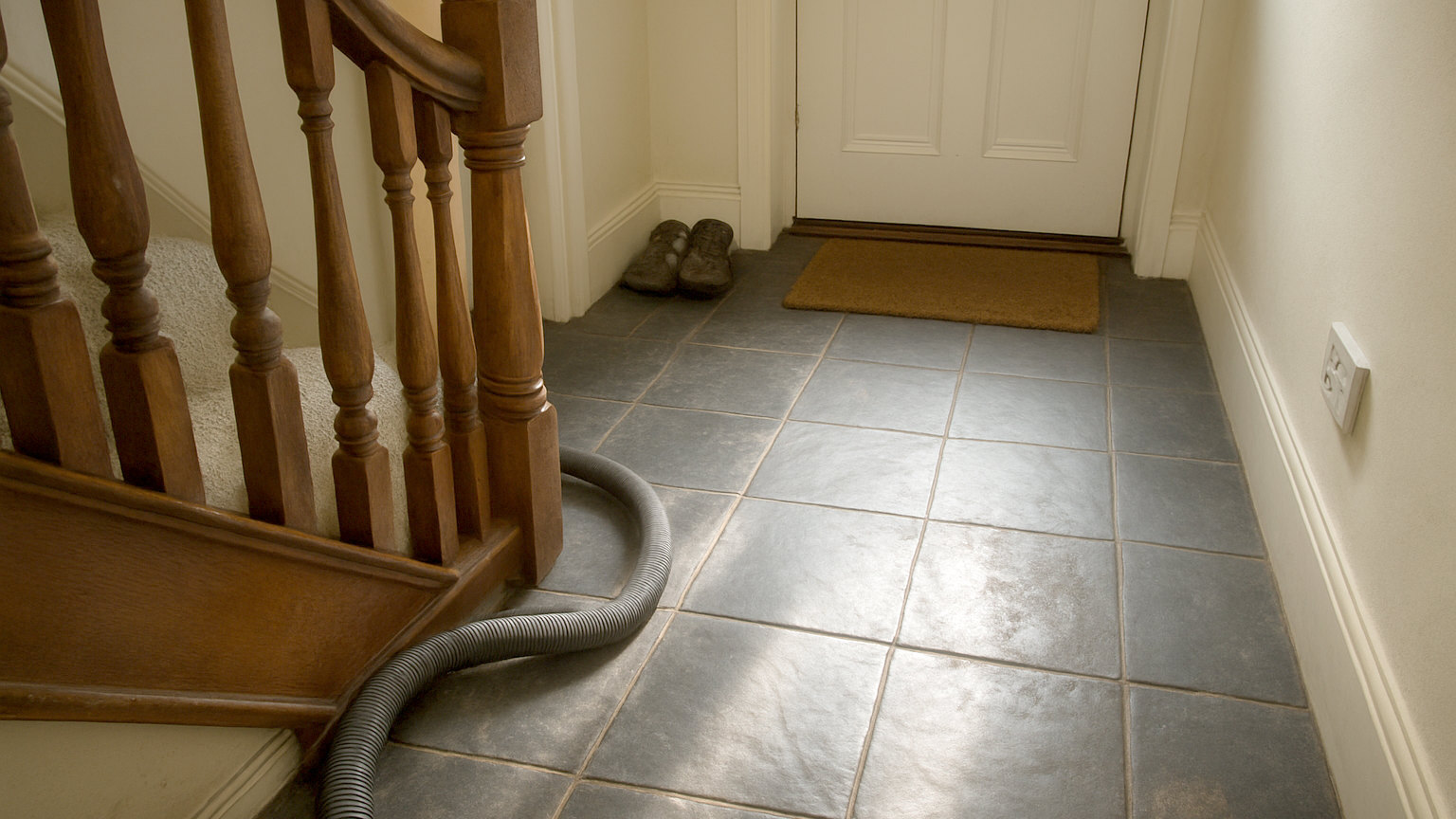
- A vacuum with a brush attachment along the base of the spindles and the top of the string, where dust compacts into a line.
- Work top to bottom, so dislodged dust falls onto stairs you have yet to vacuum.
How often does it need doing?
Wipe the handrail weekly, which takes under a minute for the whole flight and is worth doing for hygiene alone. Dust the spindles monthly, and give them a proper wash two or three times a year.
During any period of illness in the household, the handrail is one of the surfaces genuinely worth disinfecting, along with door handles and light switches, because it is touched by everyone.
What should you look for while cleaning?
Movement. Take hold of each spindle as you work down and check whether any are loose at the top or bottom, and push the handrail gently to see whether the newel posts have any play. Loose balustrades are common in older houses and get worse slowly, and catching one early means a screw rather than a repair.
What about the stringer and the underside?
The stringer, which is the board running alongside the treads, collects scuffs from shoes and dust along its top edge. Wash it with the same solution as the rail. The wall side of an enclosed staircase collects marks at hand height and benefits from a wipe at the same time, since you are already there with a cloth.